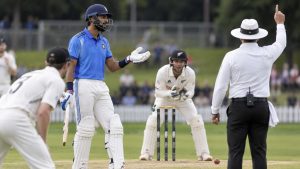
Empty Stands in Wellington Spark ‘Death of T20 Interest’ Debate After Abhishek Sharma’s Record-Breaking Knock
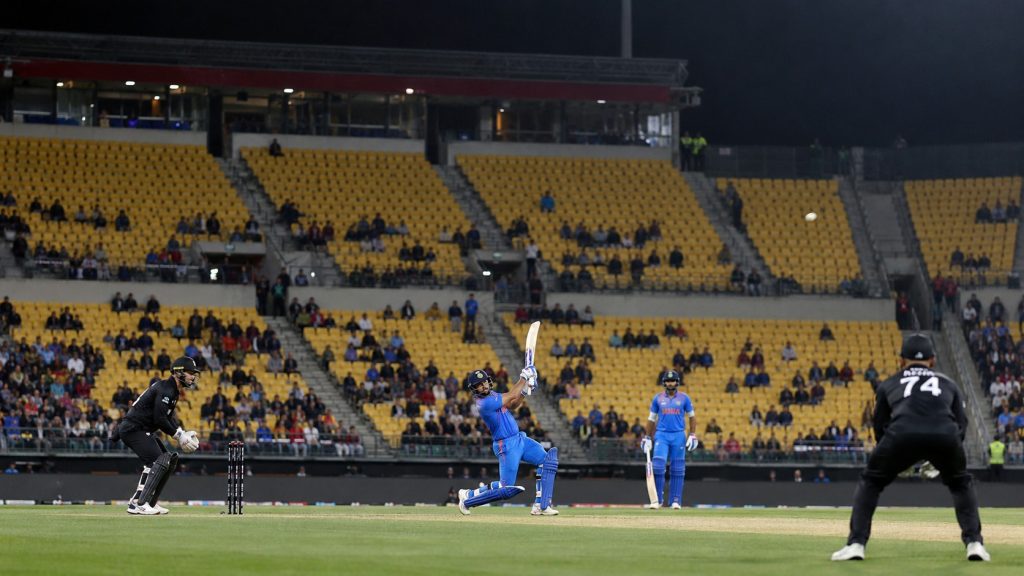
Empty sections of seating at Wellington’s Hnry Stadium sparked a social media debate during the third T20 International between New Zealand and India on October 27, 2026. The discussion raised questions about spectator interest in T20 cricket in New Zealand, even as the match delivered a remarkable batting performance from India’s Abhishek Sharma.
India defeated New Zealand by six wickets, chasing a target of 199 with 40 balls remaining to take an unassailable 3-0 lead in the five-match series. However, footage showing vacant sections of the stadium became a talking point among viewers, with some questioning why an international contest featuring two prominent teams did not appear to attract a full house.
Empty Seats at Wellington T20I Fuel Online Debate
Images from the match prompted cricket fans to question the apparent crowd turnout at Hnry Stadium. The discussion quickly expanded beyond one fixture, with some observers debating whether public interest in T20 internationals in New Zealand is declining.
However, the available information does not establish the official attendance for the Wellington match or explain why sections of the stadium appeared empty. Television images can highlight vacant seats, but they do not provide enough evidence to establish a broader decline in cricket’s popularity.
New Zealand’s T20 Ticket Sales Tell a Different Story
There is also important context behind the debate. Before the India tour began, New Zealand Cricket reported that more than 110,000 tickets had been purchased across the international tour, including approximately 63,000 for the five-match T20I series.
New Zealand Cricket had also confirmed that general admission for both Christchurch T20Is was sold out, while the final T20I at Seddon Park in Hamilton was subsequently announced as a sellout. The organization had reported strong demand for the upcoming Auckland fixture as well.
Those figures do not determine the attendance in Wellington, but they complicate the suggestion that fans have broadly lost interest in T20 cricket. Crowd levels can vary between venues and individual matches, and the Wellington images alone cannot establish a nationwide trend.
Abhishek Sharma Powers India to a Dominant Victory
While the stands generated discussion, the action on the field was dominated by India’s batting. New Zealand posted 198 for three in 20 overs after Daryl Mitchell scored an unbeaten 89 from 52 balls. Finn Allen contributed 40 from 25 deliveries, while Bevon Jacobs added an unbeaten 39.
India’s response was far more explosive. Abhishek Sharma smashed 113 runs from just 38 balls, reaching his century in 35 deliveries. The innings included nine fours and 11 sixes, putting New Zealand’s bowling attack under sustained pressure.
Teenager Vaibhav Sooryavanshi provided further acceleration with 45 from 19 balls. The opening pair added 133 runs in only 7.1 overs, giving India a commanding platform for the chase.
India raced to 118 runs during the six-over power play, setting a new record for the highest team power-play score in men’s T20 internationals. The visitors eventually reached 199 for four in 13.2 overs, winning by six wickets and securing the series with two matches still to play.
Does One Match Prove T20 Cricket Is Losing Its Appeal?
The Wellington turnout has raised a legitimate question about attendance at international cricket, but the conclusion requires more evidence. Verified crowd figures, comparisons with previous matches at the venue, ticket sales, and attendance trends across multiple seasons would provide a clearer picture of spectator interest.
For now, the debate over the empty seats remains separate from the match result. India’s emphatic victory demonstrated the entertainment potential of T20 cricket, while the crowd images highlighted the importance of understanding attendance figures before drawing wider conclusions about the sport’s popularity in New Zealand.
The fourth T20I between India and New Zealand is scheduled for October 30, 2026, at Eden Park in Auckland, followed by the series finale in Hamilton on November 1. Those fixtures will provide further opportunities to assess audience interest, although a meaningful judgment about long-term trends will require more than the appearance of a single stadium during one match.

Recommended News
Mitchell Starc Takes 6 for 72 to Break Shane...

Shadman Islam Stranded on 99 as Bad Light Ends...

Sanju Samson’s No. 3 Sacrifice for Vaibhav Sooryavanshi: One...

The “Chocolate” Strategy Explained: Why Former Cricketer Sadagopan Ramesh...

Two Office Workers Go Viral After Hilarious SA vs....
CSK Fans Embrace ‘Thala Retained’ Chatter, but MS Dhoni’s...

The ‘Telugu Brothers’ Era: How Tilak Varma and Nitish...