The “Chocolate” Strategy Explained: Why Former Cricketer Sadagopan Ramesh Praised Vaibhav Sooryavanshi’s Return to Opening
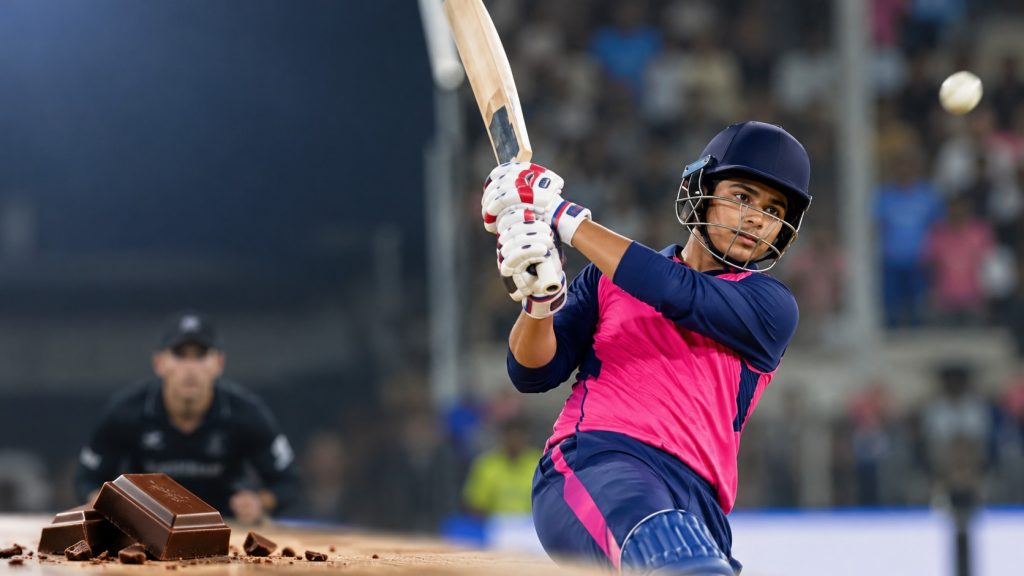
India’s teenage batting sensation Vaibhav Sooryavanshi made an immediate impact after returning to his preferred opening position against New Zealand, prompting former Indian cricketer Sadagopan Ramesh to offer a lighthearted explanation involving “chocolate.” The remark has drawn attention because of the youngster’s aggressive batting, but it was not a new nickname for the player. Ramesh was referring to the opportunity to open the innings and play in a role that suits Sooryavanshi’s strengths.
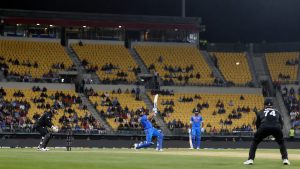
The discussion followed India’s third T20 International against New Zealand in Wellington on October 27, 2026. Sooryavanshi scored 45 runs off just 19 deliveries, helping India produce a remarkable run chase and secure a commanding position in the five-match series.
What Did Sadagopan Ramesh Mean by the “Chocolate” Comment?
Ramesh used the word “chocolate” metaphorically to describe the opportunity given to Sooryavanshi when the team management restored him to the opening position. The former India batter believed that allowing the youngster to bat at the top of the order gave him the freedom to play naturally, attack the bowlers, and use his strengths during the powerplay.
The comment was about batting position and confidence, rather than a claim that Sooryavanshi had officially acquired a new nickname. There is no established evidence in the available reporting that “Chocolate” is a formal or widely recognized nickname for the young Indian batter. Online interpretations should therefore be distinguished from Ramesh’s actual explanation.
Ramesh also acknowledged that the team management had understandable reasons for maintaining its established opening combination in the previous match. However, he argued that Sooryavanshi’s limited experience at No. 3 made the adjustment more challenging than allowing him to bat in his preferred role.
Why Returning to the Opening Slot Made a Difference
Sooryavanshi had moved down to No. 3 in the second T20I after Ishan Kishan’s injury disrupted India’s batting combination. The teenager managed only four runs off eight deliveries in that innings, a significant contrast to his usual attacking approach at the top of the order.
He returned to open alongside Abhishek Sharma in the third T20I, and the difference was evident almost immediately. Sooryavanshi struck four fours and four sixes during his 19-ball innings, finishing with a strike rate of 236.84 before being dismissed.
The opening position offers an aggressive batter a particularly valuable opportunity in T20 cricket. During the six-over powerplay, fielding restrictions limit the number of players allowed outside the inner fielding circle. This can create gaps for attacking shots and give a powerful opener opportunities to score boundaries before the field spreads out.
Ramesh’s assessment was that Sooryavanshi is particularly effective when he can attack from the beginning rather than adjusting to a different position while still developing his experience in international cricket.
Sooryavanshi and Abhishek Sharma Produce a Record-Breaking Start
India’s decision to promote Sooryavanshi proved productive during the chase against New Zealand. The teenager and Abhishek Sharma combined for a 133-run opening partnership, putting the hosts under immediate pressure.
The pair also scored 118 runs during the six-over powerplay, setting a new record for the highest powerplay total in men’s T20 internationals at the time. Abhishek led the chase with an extraordinary 113 off 38 balls, while Sooryavanshi provided the early acceleration that helped establish India’s momentum.
New Zealand had posted 198 for three in its 20 overs. India reached 199 for four in just 13.2 overs, winning by six wickets and taking an unassailable 3-0 lead in the five-match series. Abhishek was named Player of the Match for his century.
Why the “Chocolate” Remark Is Attracting Attention
The expression offers an easy way to describe a familiar cricketing debate: whether a young, naturally aggressive batter should be encouraged to play in his strongest position or asked to adapt to the team’s immediate requirements. In Sooryavanshi’s case, Ramesh’s comments highlighted the importance of giving an emerging player a clear role and the confidence to execute it.
However, the remark should not be mistaken for an official nickname or treated as evidence of a separate theory about the teenager. The central point was straightforward: the opening position gave Sooryavanshi the freedom to attack, and his performance against New Zealand demonstrated why the role suits him.
How Old Is Vaibhav Sooryavanshi?
Another important detail is his age. Although some online descriptions continue to refer to Sooryavanshi as a 13-year-old prodigy, he is 15 years old as of October 28, 2026. Born on March 27, 2011, he first made headlines as a young teenager and has since established himself as one of India’s most closely watched batting prospects.
His performance in Wellington added another striking chapter to his early international career. While Ramesh’s “chocolate” comment provided a memorable description of the batting decision, Sooryavanshi’s 45 off 19 balls and India’s record-breaking powerplay supplied the clearest evidence of the strategy’s immediate success.
The Bigger Picture
Sooryavanshi’s latest performance reinforces the value of role clarity in limited-overs cricket. His aggressive style is most effective when he can take advantage of the powerplay, attack from the first few deliveries, and build momentum for the innings. Ramesh’s “chocolate” analogy captured that idea in an informal way.
For fans discussing the phrase online, the distinction matters: “chocolate” describes the opportunity given to Sooryavanshi, not a confirmed nickname. The real story is how a return to the opening slot helped a 15-year-old batter deliver an explosive performance as India strengthened its lead over New Zealand.

Recommended News

Mitchell Starc Takes 6 for 72 to Break Shane...

Shadman Islam Stranded on 99 as Bad Light Ends...

Sanju Samson’s No. 3 Sacrifice for Vaibhav Sooryavanshi: One...

Two Office Workers Go Viral After Hilarious SA vs....

CSK Fans Embrace ‘Thala Retained’ Chatter, but MS Dhoni’s...

The ‘Telugu Brothers’ Era: How Tilak Varma and Nitish...
Devdutt Padikkal’s Frustrated Reaction to 199-Run Dismissal Sparks Umpiring...