Sanju Samson’s No. 3 Sacrifice for Vaibhav Sooryavanshi: One of T20I Cricket’s Most Selfless Moves?
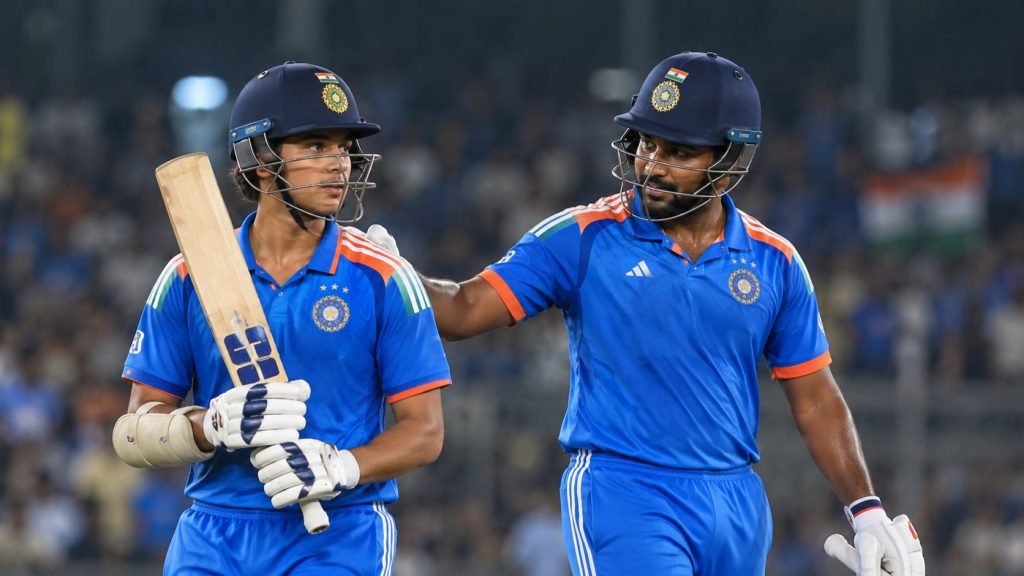
Sanju Samson’s decision to move down the batting order for 15-year-old Vaibhav Sooryavanshi has sparked fresh discussion about teamwork, leadership, and putting the team ahead of individual preferences. During India’s third T20 International against New Zealand on October 27, Samson moved to No. 3 to accommodate Sooryavanshi at the top of the order. The reshuffle worked spectacularly, as the teenager combined with Abhishek Sharma to power India toward a commanding six-wicket victory.
Abhishek subsequently praised Samson’s willingness to give up his familiar opening position. The gesture stood out because it demonstrated that a senior batter could accept a different role to help a young teammate perform in his preferred position. Whether it ranks as the most unselfish act in recent T20I history is subjective, but its importance to India’s team culture is difficult to overlook.
Why Did Sanju Samson Move to No. 3?
India’s batting-order adjustment followed an injury-related change in the playing combination. Ishan Kishan missed the second T20I after sustaining a groin injury, opening the door for Sooryavanshi to return to the lineup. However, India retained its opening combination of Samson and Abhishek for the second match, leaving the teenager to bat at No. 3.
Sooryavanshi struggled in that unfamiliar position, scoring four runs from eight deliveries in the second T20I at Christchurch on October 24. Samson, who opened alongside Abhishek in that match, scored 14 off 17 balls. India ultimately won the game by four wickets, with Tilak Varma contributing an unbeaten 51 off 26 deliveries and earning Player of the Match honors.
For the third T20I in Wellington, India changed its approach. Sooryavanshi was promoted to open alongside Abhishek, while Samson accepted the No. 3 position. Rather than treating the adjustment as a personal setback, the experienced wicketkeeper-batter became part of a lineup designed to give the teenager a better opportunity to attack during the powerplay.
Abhishek Sharma Praises Samson’s Selfless Decision
Abhishek Sharma, who shares the opening partnership with Samson, praised his regular partner for accepting the change. He highlighted how difficult it can be for a batter to leave a familiar position, particularly when that role has become an established part of his game.
Abhishek described Samson’s decision as a reflection of his character and pointed to the team’s collective attitude, in which players support one another rather than focus exclusively on individual achievements.
The praise also carried significance because Samson was not an inexperienced batter being moved around to accommodate a senior player. He was an established member of India’s T20I setup, and his flexibility helped create an opportunity for one of the youngest players in the lineup.
Vaibhav Sooryavanshi Makes the Most of His Opportunity
The batting-order change produced an explosive start for India in the third T20I. Chasing New Zealand’s total of 198 for three, Abhishek and Sooryavanshi attacked from the opening over, putting the home side’s bowling attack under immediate pressure.
Sooryavanshi scored 45 runs from just 19 deliveries, hitting four fours and four sixes. His aggressive approach complemented Abhishek’s innings and allowed India to dominate the powerplay. The pair added 133 runs for the first wicket from only 43 deliveries, giving the visitors a decisive advantage in the chase.
Abhishek delivered the standout individual performance, smashing 113 runs from 38 balls, including nine fours and 11 sixes. India raced to 118 without losing a wicket during the six-over powerplay, creating a platform that left New Zealand with little opportunity to recover.
India reached 199 for four in just 13.2 overs, winning by six wickets with 40 deliveries remaining. The result gave India an unassailable 3-0 lead in the five-match T20I series.
Was Samson’s Move More Important Than the Result?
Samson’s contribution cannot be measured only through his runs or the number of deliveries he faced. His move to No. 3 changed the opening combination and gave Sooryavanshi the chance to play in a role that better suited his attacking strengths.
Such adjustments can be difficult in professional cricket, where batting positions often become closely associated with a player’s identity, confidence, and place in the team. Accepting a different role requires trust in the team’s plans and a willingness to prioritize the collective outcome.
The change also offered India a useful tactical option. Sooryavanshi could use his aggressive instincts in the powerplay, while Samson remained available to stabilize the innings or accelerate later in the order. His 18 runs from 13 deliveries in the third T20I added to India’s successful chase, although the match ended before he could make a larger contribution.
Is It the Most Unselfish Act in Recent T20I History?
Calling Samson’s decision the most unselfish act in recent T20I history would be an opinion rather than an established fact. Cricket has seen numerous examples of players adjusting their roles for the team’s benefit, and ranking those decisions objectively is difficult.
However, Samson’s gesture deserves recognition because it combined personal flexibility with a clear team benefit. He accepted a different batting position, allowed a teenage teammate to open, and helped maintain a balanced batting combination. Sooryavanshi responded with a rapid 45, while Abhishek produced a remarkable century as India completed one of its most emphatic chases of the series.
The episode also offered a valuable example of how experienced players can help younger teammates develop without putting unnecessary pressure on them. Providing a player with a familiar role can improve confidence, encourage positive intent, and allow talent to emerge more naturally.
What Happens Next for India’s Batting Order?
India’s next challenge will be deciding whether to retain the revised combination for the remaining matches against New Zealand. The third T20I provides a compelling case for opening with Abhishek and Sooryavanshi, but the team’s management must also consider opposition conditions, match situations, and the balance of the middle order.
Samson’s versatility gives India another option. His ability to adapt to No. 3 could provide flexibility if the team wants to keep the young opener at the top. However, one successful match does not automatically guarantee that the same arrangement will be used throughout the series.
For now, the Wellington match has delivered a clear result and a noteworthy example of team-first thinking. Samson’s move may not settle debates about the greatest act of unselfishness in T20I cricket, but it has reinforced an important principle: a successful team needs players who are willing to adjust their roles when the situation demands it.

Recommended News

Mitchell Starc Takes 6 for 72 to Break Shane...

Shadman Islam Stranded on 99 as Bad Light Ends...

The “Chocolate” Strategy Explained: Why Former Cricketer Sadagopan Ramesh...

Two Office Workers Go Viral After Hilarious SA vs....

CSK Fans Embrace ‘Thala Retained’ Chatter, but MS Dhoni’s...

The ‘Telugu Brothers’ Era: How Tilak Varma and Nitish...

Devdutt Padikkal’s Frustrated Reaction to 199-Run Dismissal Sparks Umpiring...